A UN internship on the Ebola response
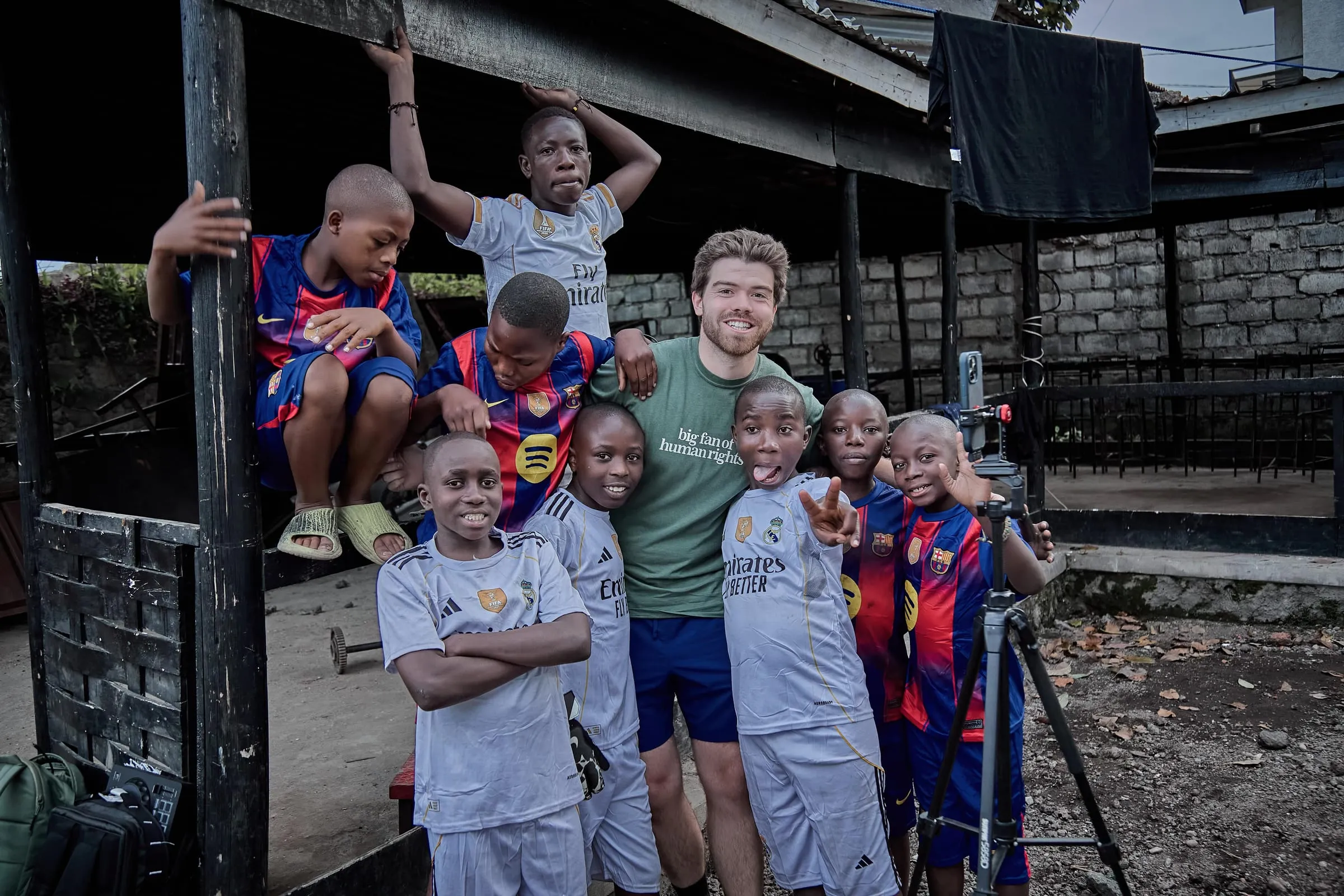
Nicolas Fesser interns with the United Nations, procuring personal protective equipment (PPE) for the Ebola outbreak response in the Democratic Republic of the Congo.
Our story
Fesser and Friends opened its first Center for Hope in Beni on March 1, 2020. Since then, more than a thousand children have gone home.
Meet the founder
“In 2019, at the end of my first year of medical school, I traveled to the Democratic Republic of the Congo to help medical teams contain one of the largest Ebola outbreaks ever recorded.”
After eight weeks in North Kivu, Nicolas realized something deadlier than Ebola was shaping children's lives in the region: violence, war and armed conflict. Back in the United States, news of new attacks and killings kept arriving from the places he had just lived and worked in. Friends called and wrote, and one phrase kept coming back: please do not forget about us.
He decided to use his platform and privilege to do something about it. With Alain Bayongwa, the Congolese lawyer he met during the outbreak, and a local team, the first Center for Hope opened in Beni a few months later.
“If we could save some children from a life of war and violence, we could do our part to change the world.”
Nicolas is now an emergency physician and Global Health Fellow at Stanford University, and oversees all of the organization's operations, with Alain Bayongwa leading the work on the ground in Goma and Freddy Moise in Beni.
The problem we aim to solve
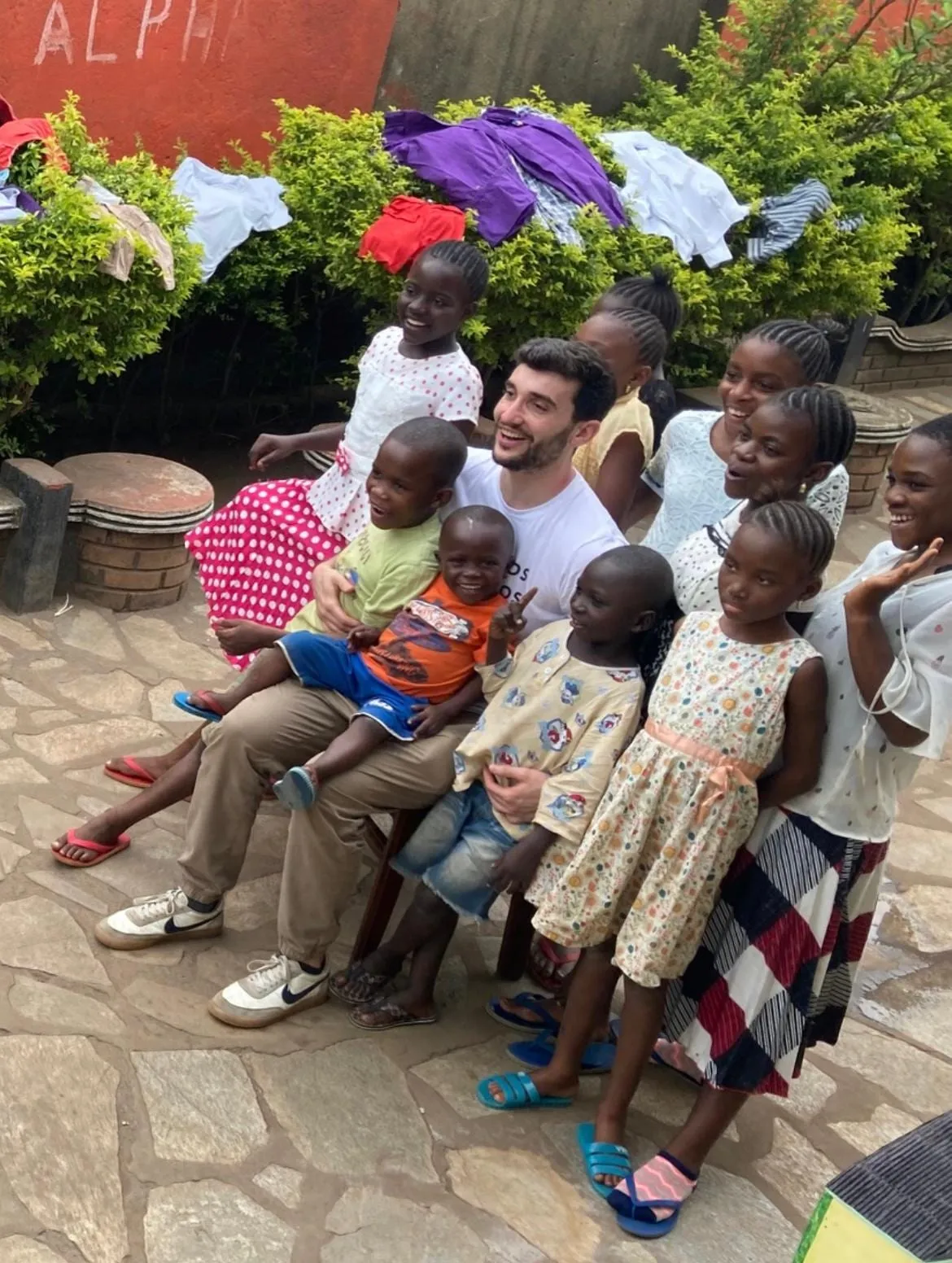
Armed groups recruit children as fighters, porters, scouts and “wives”. Children who lose their families in an attack are the easiest to take. Those who escape are often rejected by their own communities.
Our mission is to end the cycle of child soldier and child sex-worker recruitment in the DRC, and the exploitation of vulnerable children. We do it by reaching children before armed groups do, and by giving those who escape a road back.
Understand the conflict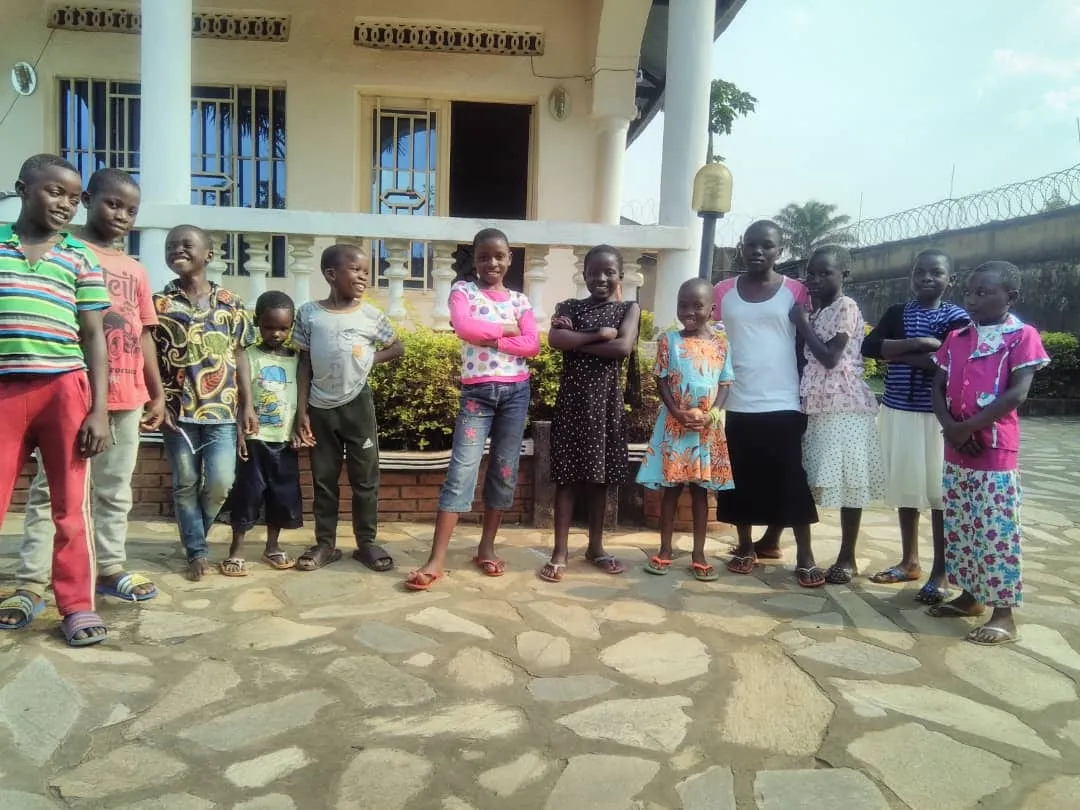
What we stand for
We believe the people closest to a problem understand it best, so we built our model around them.
Every staff member is Congolese. We partner with World Hope Givers (WHG), a Congolese NGO, and follow its judgment on what children and communities need.
Residential care is a bridge, never a destination. Our goal for every child is a safe return to family.
A written child protection policy, safe recruitment, a zero-tolerance code of conduct, and anonymous complaint channels.
Children go to local schools when it is safe. We buy from local businesses and pay salaries above the national average, with no gender pay gap.
We are not religiously affiliated. We shelter children under 18 of any gender, and staff and children are free to practice their own faith.
Our history
What was happening in eastern Congo, and how we responded in Beni and Goma, side by side.
Nicolas Fesser interns with the United Nations, procuring personal protective equipment (PPE) for the Ebola outbreak response in the Democratic Republic of the Congo.
Nicolas starts medical school at the University at Buffalo (SUNY).
An Ebola outbreak is declared in North Kivu, centered on Beni. It becomes one of the largest Ebola outbreaks ever recorded.
The World Health Organization declares the North Kivu Ebola outbreak a public health emergency of international concern.
At the end of his first year of medical school, Nicolas Fesser travels to the DRC for the first time and spends eight weeks volunteering in the Ebola camps in North Kivu. There he meets Alain Bayongwa, a Congolese lawyer working to protect children.
Under Site Director Freddy Moise, the center takes in children orphaned or separated by armed attacks. Fesser and Friends Inc. is founded the same month.
After almost two years, the North Kivu Ebola outbreak is declared over.
Fesser and Friends receives its IRS employer identification number and the board adopts conflict-of-interest, whistleblower and records-retention policies.
The M23 rebel group, defeated in 2013, re-emerges in North Kivu late in the year.
Beni's Division of Social Affairs (DIVAS) names our center “Beni's best run orphanage”. Fundación Gomaespuma begins funding school costs, and World Hope Givers becomes our implementing partner.
Reunifications rise to 195 in a single year. WHG is elected co-lead of the Education Cluster for Greater North Kivu.
M23 seizes the Rubaya coltan mines in North Kivu, which supply about 15% of the world's tantalum.
M23/AFC forces seize Goma, delaying the opening of our second center. Alain is forced to flee, and returns ahead of his family because the need is too great.
A long-stay rehabilitation center for boys formerly associated with armed groups. Built for 20 children, it receives 50 referrals on its first day.
A Bundibugyo Ebola outbreak is declared on May 15 and spreads to Beni. On May 31 the ADF enters Beni city, killing at least 16 people.
As Ebola reaches Beni and the ADF enters the city, the center adds infection-prevention measures and on-site classrooms, and shelters neighbors inside its compound.
A $30,000 grant through the University of Washington's Social Justice through Philanthropy course, funded by the Philanthropy Lab, lets us buy 1,500 m² of land in Beni for a permanent Center for Hope, ending six years of moving between rented houses. Construction hasn't started yet: we're raising the funds to build the campus, and you can help make it happen.
Help build the campusFesser and Friends, World Hope Givers and DIVAS Beni sign a five-year collaboration protocol running to 2031.
Drag or scroll sideways, or use the arrows, to move through the years. Select any event to read more about it.
2017
Nicolas Fesser interns with the United Nations, procuring personal protective equipment (PPE) for the Ebola outbreak response in the Democratic Republic of the Congo.
2018
Nicolas starts medical school at the University at Buffalo (SUNY).
August 1, 2018
An Ebola outbreak is declared in North Kivu, centered on Beni. It becomes one of the largest Ebola outbreaks ever recorded.
July 2019
The World Health Organization declares the North Kivu Ebola outbreak a public health emergency of international concern.
2019
At the end of his first year of medical school, Nicolas Fesser travels to the DRC for the first time and spends eight weeks volunteering in the Ebola camps in North Kivu. There he meets Alain Bayongwa, a Congolese lawyer working to protect children.
March 1, 2020
Under Site Director Freddy Moise, the center takes in children orphaned or separated by armed attacks. Fesser and Friends Inc. is founded the same month.
June 25, 2020
After almost two years, the North Kivu Ebola outbreak is declared over.
2021
Fesser and Friends receives its IRS employer identification number and the board adopts conflict-of-interest, whistleblower and records-retention policies.
Late 2021
The M23 rebel group, defeated in 2013, re-emerges in North Kivu late in the year.
2022
Beni's Division of Social Affairs (DIVAS) names our center “Beni's best run orphanage”. Fundación Gomaespuma begins funding school costs, and World Hope Givers becomes our implementing partner.
2023
Reunifications rise to 195 in a single year. WHG is elected co-lead of the Education Cluster for Greater North Kivu.
April 2024
M23 seizes the Rubaya coltan mines in North Kivu, which supply about 15% of the world's tantalum.
January 2025
M23/AFC forces seize Goma, delaying the opening of our second center. Alain is forced to flee, and returns ahead of his family because the need is too great.
May 2025
A long-stay rehabilitation center for boys formerly associated with armed groups. Built for 20 children, it receives 50 referrals on its first day.
May 2026
A Bundibugyo Ebola outbreak is declared on May 15 and spreads to Beni. On May 31 the ADF enters Beni city, killing at least 16 people.
2026
As Ebola reaches Beni and the ADF enters the city, the center adds infection-prevention measures and on-site classrooms, and shelters neighbors inside its compound.
July 2026
A $30,000 grant through the University of Washington's Social Justice through Philanthropy course, funded by the Philanthropy Lab, lets us buy 1,500 m² of land in Beni for a permanent Center for Hope, ending six years of moving between rented houses. Construction hasn't started yet: we're raising the funds to build the campus, and you can help make it happen.
Help build the campusSeptember 2026
Fesser and Friends, World Hope Givers and DIVAS Beni sign a five-year collaboration protocol running to 2031.
Our partner
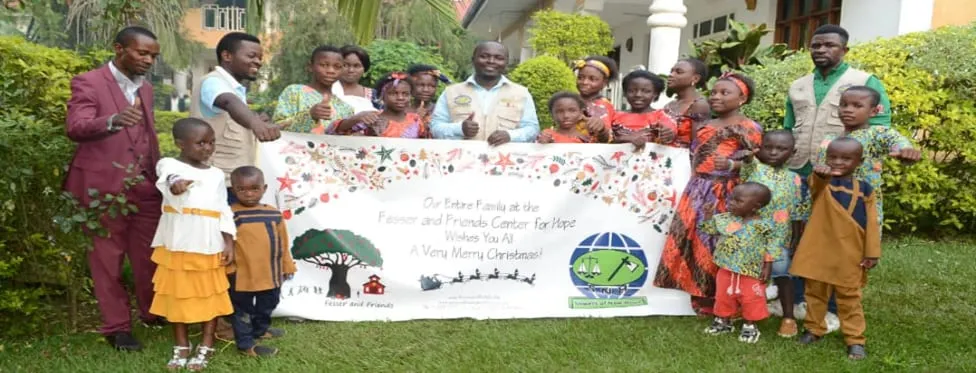
World Hope Givers (WHG) is a Congolese NGO founded in 2017 to protect women and children in eastern DRC from armed conflict. WHG is our implementing partner and the legal guardian of the children in our care. It runs the centers day to day, manages funds through its own treasurer and accountant, and reports to us every month.
We provide funding, strategy, medical and public-health expertise, and financial oversight from the United States.
Join us
Your gift keeps a bed, three meals, school and counseling ready for the next child who needs them. Monthly gifts let us plan ahead in a place where nothing else is predictable.
Tax-deductible · Secure checkout by Donorbox · Our treasurer reviews every field expense