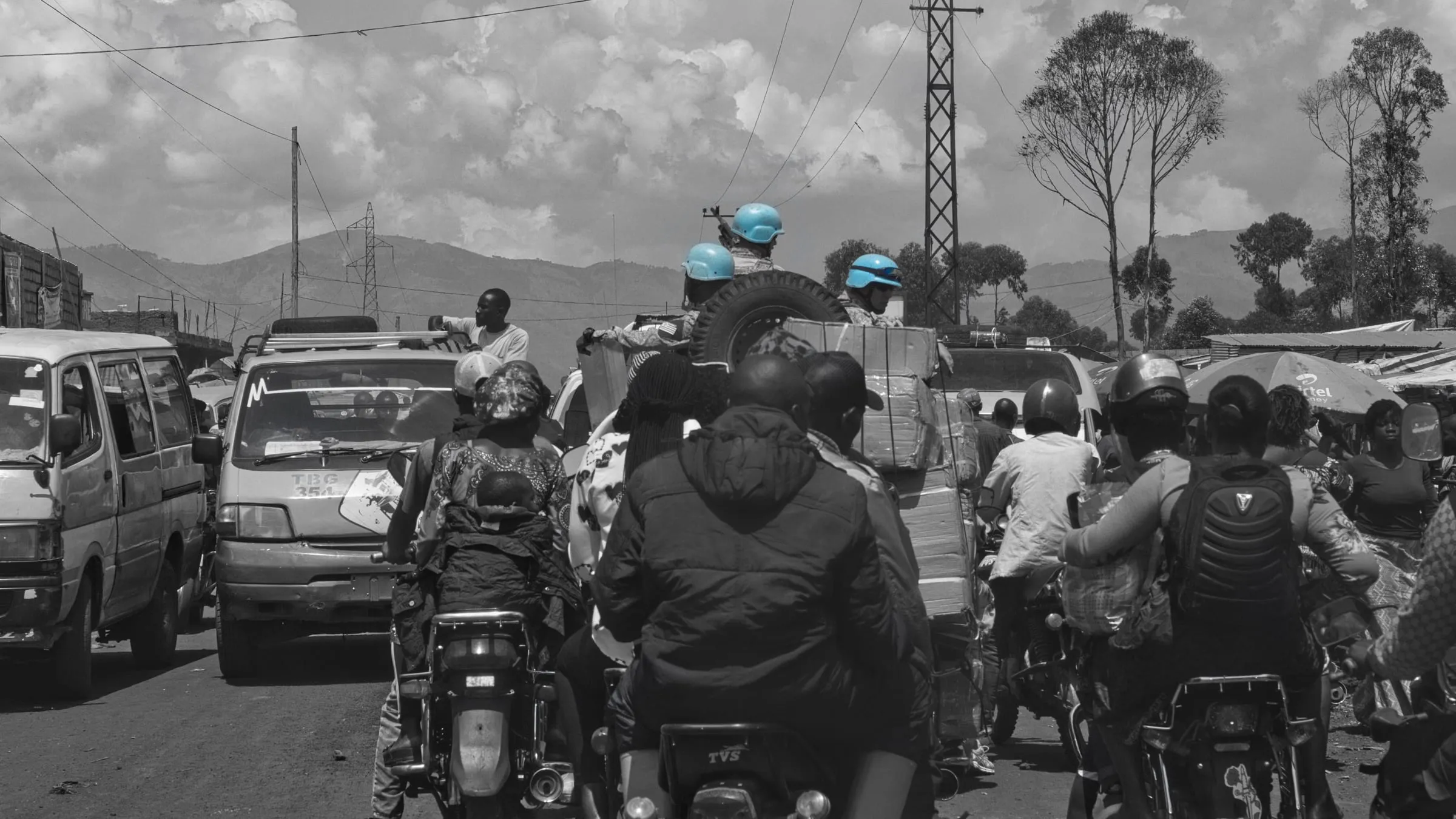
01 / 07 The DRC at a glance
112.8 million
people live in the DRC. More than half of them are children.
Source: UNFPA, 2025 · UNICEF Read the chapter
Understanding the DRC
140 years of history, condensed into seven short chapters. Scroll through the key facts, then open any chapter to go deeper.
01 / 07 The DRC at a glance
112.8 million
people live in the DRC. More than half of them are children.
Source: UNFPA, 2025 · UNICEF Read the chapter
02 / 07 A short history
1885
European powers recognize the Congo as the personal property of one man, King Leopold II.
Source: BBC News timeline Read the chapter
03 / 07 The conflict today
120
armed groups were mapped in North and South Kivu alone, where we work.
Source: Kivu Security Tracker, 2017 Read the chapter
04 / 07 Children and war
1,397
children were recruited by armed groups in 2025. Those are only the cases the UN could verify.
Source: UN Secretary-General, 2026 Read the chapter
05 / 07 Minerals
73%
of the world's mined cobalt comes from the DRC. It's in your phone, your laptop, your car.
Source: Cobalt Institute, 2025 Read the chapter
06 / 07 Ebola & health
10,467
confirmed Ebola cases in the DRC as of October 31, 2026, the deadliest outbreak in the country's history.
Source: US CDC, 2026 Read the chapter
07 / 07 Why we work with local partners
4.3%
of international aid went straight to local groups in 2025, even though donors promised 25%. That's why our centers are run by World Hope Givers, a Congolese organization.
Source: Development Initiatives, 2026 Read the chapter
Go deeper
01 The DRC at a glance
The DRC is the size of Western Europe, home to about 113 million people, more than half of them children, and some of the richest mineral deposits on Earth. Yet about 81% of its people live on less than US$3 a day.
The Democratic Republic of the Congo (DRC) sits at the heart of Africa. It is the second-largest country on the continent, about the size of Western Europe, and it straddles the Equator and much of the Congo River basin, home to the world’s second-largest tropical rainforest. Its capital, Kinshasa, lies in the far west. Beni and Goma, where Fesser and Friends works, are about 1,500 km (930 miles) away in North Kivu province, near the borders with Uganda and Rwanda.
About 113 million people live in the DRC, and it is one of the youngest countries in the world: UNICEF estimates that more than half the population is under 18 1. People speak hundreds of languages. French is the official language, and Lingala, Swahili, Kikongo and Tshiluba are national languages. In the east, where we work, Swahili is spoken most widely.
The DRC is enormously rich in natural resources, including copper, cobalt, gold, tin, coltan and diamonds, as well as farmland, forests and rivers with huge hydro-electric potential. Yet most of its people are very poor. The World Bank estimates that in 2025 about 81% of Congolese lived on less than US$3 a day 2.
Three decades of conflict in the east have left the DRC with one of the largest displacement crises in the world. UNHCR counted more than 6.1 million people displaced inside the country at the end of June 2026 3, and estimates from other UN agencies have been higher still: OCHA put the figure at about 6.5 million in early 2026 4. In 2026 the country is also facing the second-largest Ebola outbreak on record (see Section 6).
02 A short history
Ancient kingdoms, a brutal colonial rubber regime under King Leopold II, independence in 1960, 32 years of Mobutu's kleptocracy, then two wars that drew in at least eight African countries.
Kingdoms and the slave trade. Long before colonization, organized states flourished here. The Kingdom of Kongo exchanged ambassadors with Portugal from the late 1400s, and the Luba, Lunda and Kuba kingdoms rose inland. The Atlantic and East African slave trades later devastated these societies 5.
Leopold II’s “Congo Free State” (1885–1908). At the Berlin Conference of 1884–85, European powers recognized King Leopold II of Belgium’s claim to the Congo basin as his personal possession 6. His agents used forced labor, hostage-taking and mutilation to extract rubber and ivory. Estimates of the resulting deaths are disputed and run into the millions; the historian Adam Hochschild puts the population loss as high as 10 million 5. After an international outcry, Belgium took over the colony in 1908 6.
Independence and Mobutu. The Congo became independent on June 30, 1960, with Patrice Lumumba as prime minister 6. He was deposed and, in January 1961, killed in Katanga; in 2022 Belgium’s prime minister acknowledged his country’s “moral responsibility” 7. Army chief Joseph-Désiré Mobutu seized power in 1965, renamed the country Zaire in 1971, and ruled for 32 years with Western backing. His regime became the textbook example of a kleptocracy, or government by theft: Mobutu and his inner circle siphoned off the country’s mineral wealth and foreign aid while roads, schools, hospitals and the army fell apart 6.
The Congo Wars (1996–2003). After the 1994 genocide against the Tutsi in Rwanda, more than a million Rwandans, including people responsible for the genocide, fled into eastern Zaire. In 1996 Rwanda and Uganda backed Laurent-Désiré Kabila’s rebellion, which toppled Mobutu in 1997. A second war in 1998 drew in at least eight African countries. The International Rescue Committee estimated 5.4 million excess deaths from 1998 to 2007, mostly from hunger and disease; other researchers believe the true figure is lower 8.
Aftermath. Peace deals in 2002–2003 formally ended the war, and elections followed in 2006 6. But many armed groups never disarmed, and the east has known little peace since.
03 The conflict in the East today
In 2017 researchers mapped about 120 armed groups in North and South Kivu alone. M23/AFC took Goma in January 2025. Peace talks continue, but the fighting has not stopped.
Eastern DRC is not one war but many: in 2017 researchers mapped 120 armed groups in North and South Kivu alone 39.
Key events. M23 took the Rubaya coltan mines in April 2024 13, then Goma on January 27, 2025 and Bukavu on February 16, 2025 12; the UN says nearly 3,000 people died in the battle for Goma 14. The DRC and Rwanda signed a US-brokered peace agreement on June 27, 2025 and the “Washington Accords” on December 4, 2025 1215. Qatar-mediated talks produced the Doha Framework between Kinshasa and M23 on November 15, 2025 16. Days later M23 seized Uvira, then announced a pull-back under US pressure 1517.
Autumn 2026. Only two of the eight Doha protocols had been signed by October, and fighting continued in both Kivus 18. The ADF entered Beni city on May 31, 2026, killing at least 16 people according to the government 19. On October 12, 2026 former president Joseph Kabila, sentenced to death in absentia in 2025 and sanctioned by the US in April 2026, launched the Front pour la Refondation de la Nation (FRN) in Goma, replacing the AFC/M23 920. MONUSCO’s mandate runs to December 20, 2026 21.
04 Children and armed conflict
In 2025 the UN verified 4,114 grave violations against 3,263 children in the DRC, including 1,397 recruited by armed groups. Those are only the cases it could confirm.
The DRC is one of the most dangerous places in the world to be a child in wartime. In June 2026 the UN Secretary-General reported 4,114 grave violations against 3,263 children in the DRC in 2025, the second-highest total of any country 22. These are only the cases the UN could verify. In 2025 22:
Why children? Children are easy to control and cheap. Many are abducted. Others “join” because their families have been killed, because they are hungry, or because a group promises protection or revenge. Save the Children reported in February 2026 that recruited children describe abduction, drugging and violence 23. They serve as fighters, porters, cooks, spies and “wives”.
Coming home. In Ituri alone, about 1,360 children were released in 2025, while some 13,000 remained with armed groups 23. Released children need medical care, safe shelter, counseling and school, a process known as DDR (disarmament, demobilization and reintegration). The UN has urged the government to stop detaining these children and to give them reintegration services instead 22.
Above all, children need a family. Tracing relatives, preparing families and communities, and following up after a child returns home reduces stigma and the risk of re-recruitment. That is why family reunification is at the center of Fesser and Friends’ work.
05 Minerals and the global supply chain
About 73% of the world's mined cobalt comes from the DRC. In the east, armed groups profit from controlling and taxing the mines that feed global electronics supply chains.
Mines and armed groups
41%
of the 2,840 mining sites researchers visited had armed men interfering, by taxing, extorting or controlling the trade.
About 230,000 miners were working at sites with armed interference when they were visited. Tap a category to show or hide it.
Our centers Rubaya coltan mines, held by M23 since 2024
Your phone, laptop or car probably contains metal from the DRC. The country produced about 73% of the world’s mined cobalt in 2025, a key battery ingredient 24. Most cobalt and copper come from mines in the south-east, far from the fighting in the Kivus.
In the east, the issue is “conflict minerals”, or 3TG: tin, tantalum, tungsten and gold. Tantalum comes from coltan and is used in the tiny capacitors inside electronics. For decades, armed groups have profited by controlling mines, taxing diggers and traders, and smuggling ore across borders.
Rubaya. The coltan mines around Rubaya in North Kivu supply about 15% of the world’s tantalum, according to Global Witness 25. M23 took control in April 2024. UN experts estimated that it earned about US$800,000 a month from taxing the trade, and that more than 120 tonnes of coltan a month were trafficked to Rwanda in mid-2024 25. The UN Group of Experts’ June 2026 report linked a sharp rise in Rwanda’s tin-ore exports in 2025 to probable smuggling from M23-held areas; Rwanda had not responded at the time 26. Global Witness reports that smuggled ore can be relabeled as Rwandan before reaching global supply chains 25.
Rules for companies. Since 2012, Section 1502 of the US Dodd-Frank Act has required US-listed companies to report whether their products contain 3TG from the DRC or its neighbors. Since January 1, 2021, the EU Conflict Minerals Regulation has required EU importers to check their 3TG supply chains 27. Critics say enforcement is weak and certification can be gamed; others warn that blunt boycotts hurt miners who depend on the trade.
06 Ebola and public health
In 2026 the DRC is facing the deadliest Ebola outbreak in its history, caused by a strain with no approved vaccine, on top of cholera, measles and hunger.
2018–2020. North Kivu and Ituri suffered what was then the second-largest Ebola outbreak in history, with 3,470 cases and 2,287 deaths; Beni was an epicenter 28. Responders worked in the middle of active conflict. Fesser and Friends’ founder, Dr. Nicolas Fesser, spent eight weeks in North Kivu during that outbreak in 2019, which is where the organization’s story begins.
Later outbreaks. Ebola returned to North Kivu in 2021 (12 cases) 28. An outbreak in Bulape, Kasai province, began in September 2025, caused 64 cases and was declared over on December 1, 2025 29.
2026. On May 15, 2026, the DRC declared its 17th Ebola outbreak, caused by the Bundibugyo strain, which began in a mining area of Ituri 30. Bundibugyo has no approved vaccine or specific treatment, though candidates are being tested 31. The WHO declared a global health emergency on May 17. Beni and Katwa are among the worst-hit health zones in North Kivu 31. In August it overtook the 2018–2020 outbreak as the deadliest in the country’s history 42. As of October 31, 2026, the DRC had reported 10,467 confirmed cases and 5,103 deaths 33, making it the second-largest Ebola outbreak ever recorded, after West Africa in 2014–2016. Ituri is the worst-affected province, followed by North Kivu 32. Figures change weekly. Check the WHO for the latest.
Other threats. The DRC was the epicenter of the 2024–2025 mpox emergency, which the WHO ended on September 5, 2025 34. In 2025 it had its worst cholera outbreak in 25 years, with more than 64,000 cases and 1,888 deaths 35. A measles epidemic killed more than 6,000 people between early 2019 and January 2020 36. About 26.5 million people faced acute food insecurity in early 2026 37.
07 Why local leadership matters
Congolese responders are the first to act and the last to leave. Yet in 2025 only about 4.3% of international humanitarian funding went directly to local organizations.
Congolese people are not only victims of this crisis. They are its first and most lasting responders. When an attack empties a village or Ebola closes the schools, it is local nurses, teachers, social workers, church groups and neighbors who act first, and they stay after international teams leave. They speak the languages, understand local politics, know which families can be traced across a front line, and can reach places where foreigners cannot safely go.
The humanitarian system has long promised to recognize this. In the 2016 “Grand Bargain”, major donors and aid agencies committed to channel at least 25% of humanitarian funding to local and national actors “as directly as possible” 38. A decade later, that goal remains far off. According to Development Initiatives’ Global Humanitarian Assistance Report 2026, local and national actors received only about 4.3% of international humanitarian funding directly in 2025, and about 8.7% including funds passed through intermediaries. The volume of this funding fell by 27% as global aid budgets were cut 38.
This “localization” agenda is not about charity; it is about effectiveness and dignity. Locally led organizations tend to cost less, respond faster and keep working through insecurity. Fesser and Friends is built on this model. Its centers in Beni and Goma are run day to day by its Congolese partner, World Hope Givers, with an all-Congolese staff. The role of Fesser and Friends is to raise funds, provide oversight and stand behind local leaders.
Timeline
Pick an era to highlight it, or select any point on the timeline to read what happened.
Leopold II proclaims the "Congo Free State" as his personal possession after the Berlin Conference.
Belgium annexes the territory as the Belgian Congo after an international outcry over atrocities.
Independence on June 30; Patrice Lumumba becomes prime minister. Katanga secedes.
Lumumba is killed in Katanga in January.
Joseph-Désiré Mobutu seizes power in a coup in November. His 32-year rule becomes a byword for kleptocracy: government by theft.
Mobutu renames the country Zaire.
After the genocide against the Tutsi in Rwanda, more than a million Rwandans, including génocidaires, flee into eastern Zaire.
First Congo War: a Rwanda- and Uganda-backed rebellion led by Laurent-Désiré Kabila begins.
Mobutu falls; the country is renamed the Democratic Republic of the Congo.
Second Congo War begins, drawing in at least eight African countries.
Laurent Kabila is assassinated; his son Joseph Kabila becomes president.
Peace agreements formally end the Second Congo War (transition from 2003).
First multiparty elections in four decades.
M23 rebellion briefly captures Goma (November); it is defeated in 2013.
Ebola outbreak declared in North Kivu (August 1), centered on Beni.
Félix Tshisekedi becomes president (January). WHO declares the Ebola outbreak a global emergency (July). Fesser and Friends' founder volunteers in the Ebola camps in North Kivu.
The North Kivu Ebola outbreak is declared over (June 25). Fesser and Friends opens the Beni Center for Hope (March 1).
M23 re-emerges in North Kivu late in the year.
M23 takes the Rubaya coltan mines (April). WHO declares mpox a global emergency (August).
M23/AFC captures Goma (January 27) and Bukavu (February 16). DRC–Rwanda peace agreement signed in Washington (June 27); Doha Framework signed by the DRC and M23 (November 15); Washington Accords signed (December 4). Ebola outbreak in Kasai (September to December).
Bundibugyo Ebola outbreak declared (May 15) and spreads to Beni. ADF enters Beni city (May 31). Joseph Kabila launches the FRN, replacing the AFC/M23 (October 12). It becomes the deadliest Ebola outbreak in the DRC's history (August); confirmed cases pass 10,000 (late October).
Drag or scroll sideways, or use the arrows, to move through the years. Select any event to read more about it.
1885
Leopold II proclaims the "Congo Free State" as his personal possession after the Berlin Conference.
1908
Belgium annexes the territory as the Belgian Congo after an international outcry over atrocities.
1960
Independence on June 30; Patrice Lumumba becomes prime minister. Katanga secedes.
1961
Lumumba is killed in Katanga in January.
1965
Joseph-Désiré Mobutu seizes power in a coup in November. His 32-year rule becomes a byword for kleptocracy: government by theft.
1971
Mobutu renames the country Zaire.
1994
After the genocide against the Tutsi in Rwanda, more than a million Rwandans, including génocidaires, flee into eastern Zaire.
1996
First Congo War: a Rwanda- and Uganda-backed rebellion led by Laurent-Désiré Kabila begins.
1997
Mobutu falls; the country is renamed the Democratic Republic of the Congo.
1998
Second Congo War begins, drawing in at least eight African countries.
2001
Laurent Kabila is assassinated; his son Joseph Kabila becomes president.
2002
Peace agreements formally end the Second Congo War (transition from 2003).
2006
First multiparty elections in four decades.
2012
M23 rebellion briefly captures Goma (November); it is defeated in 2013.
2018
Ebola outbreak declared in North Kivu (August 1), centered on Beni.
2019
Félix Tshisekedi becomes president (January). WHO declares the Ebola outbreak a global emergency (July). Fesser and Friends' founder volunteers in the Ebola camps in North Kivu.
2020
The North Kivu Ebola outbreak is declared over (June 25). Fesser and Friends opens the Beni Center for Hope (March 1).
2021
M23 re-emerges in North Kivu late in the year.
2024
M23 takes the Rubaya coltan mines (April). WHO declares mpox a global emergency (August).
2025
M23/AFC captures Goma (January 27) and Bukavu (February 16). DRC–Rwanda peace agreement signed in Washington (June 27); Doha Framework signed by the DRC and M23 (November 15); Washington Accords signed (December 4). Ebola outbreak in Kasai (September to December).
2026
Bundibugyo Ebola outbreak declared (May 15) and spreads to Beni. ADF enters Beni city (May 31). Joseph Kabila launches the FRN, replacing the AFC/M23 (October 12). It becomes the deadliest Ebola outbreak in the DRC's history (August); confirmed cases pass 10,000 (late October).
Additional resources
Additional resources for learning and reading, chosen to help you go deeper into the DRC's history and today's crisis. All are independent and not produced by Fesser and Friends, and links open in a new tab.
Figures in a crisis change quickly. Every number on this page links to its source. If you spot something out of date, tell us.
Join us
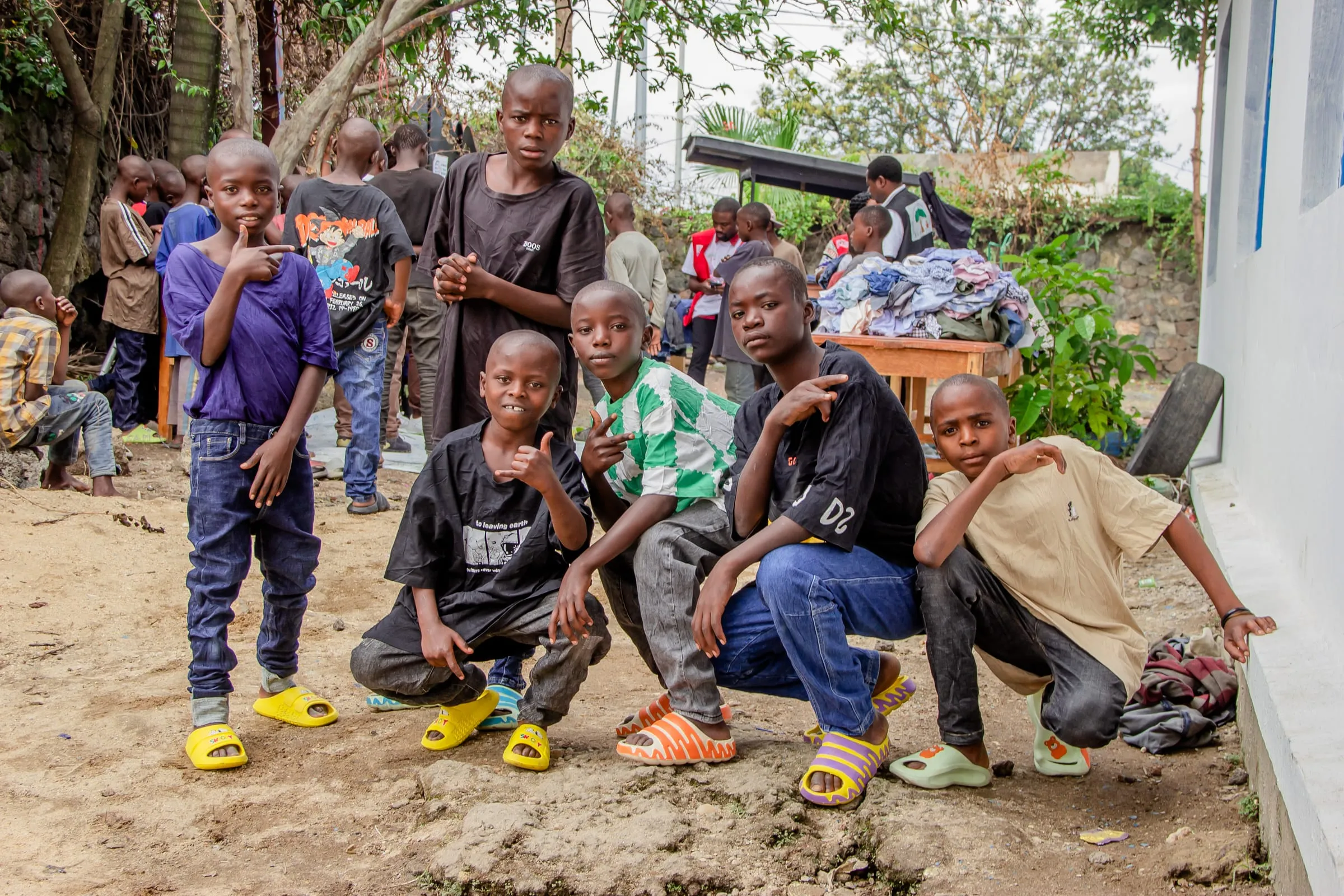
Your gift keeps a bed, three meals, school and counseling ready for the next child who needs them. Monthly gifts let us plan ahead in a place where nothing else is predictable.
Tax-deductible · Secure checkout by Donorbox · Our treasurer reviews every field expense